Skip to content
UGC · AICTE · Academic Bank of Credits

B.Tech Credit Transfer, Lateral Entry & Backlog Rescue

A stalled engineering degree is an administrative problem, not the end of the degree. Cleared credits are audited, mapped and carried across to AVIT so you re-enter at the year your credits support — not at the beginning.

Free Credit Transfer Evaluation
Direct Answer

How does B.Tech credit transfer and backlog degree completion work in 2026?

B.Tech credit transfer allows students with year-backs, discontinued courses, or uncleared backlogs to migrate their earned course credits directly to accredited institutions like AVIT (Vinayaka Mission's Research Foundation) under the UGC Academic Bank of Credits (ABC) and AICTE lateral entry guidelines. Students secure direct 2nd or 3rd-year admission, eliminating year loss while working toward a recognized degree.

The credits are not simply asserted — they are established by a subject-by-subject audit of the official grade sheet before any seat is discussed. The Academic Bank of Credits holds a student's earned credits in a portable digital account, and lateral entry is the mechanism that applies them at the receiving university. Only credits never earned have to be repeated.

Scope: credit transfer and lateral entry apply to engineering programmes only. Medical, allied health and nursing courses admit entry-level students at first year and have no transfer route.

Comparison matrix

Your situation → the transfer solution → the institution

Six scenarios cover almost every stalled engineering degree. Find yours, then check the entry point and the realistic year loss.

Credit transfer scenarios mapped to solutions, institutional options, entry points and expected year loss
ScenarioYour situationTransfer solutionInstitutionEntry pointYear loss
Year-Back LockoutYou have been detained for the year because arrear credits were not cleared, and your current college will not promote you to.Cleared credits are audited and mapped against the receiving university's regulations, and you re-enter at the year your validated credits support —.AVIT2nd or 3rd year lateral entryZero to minimal
Discontinued CourseYou dropped out mid-degree — for medical, financial, family or relocation reasons — and the original college has since closed your file.Your completed semesters are revalidated through a transcript and syllabus-mapping exercise, and admission is granted against a live lateral-entry seat so the.AVIT2nd or 3rd year, based on credits clearedOnly the years already lost
N+2 / Maximum-Duration ExpiryYour university's maximum permissible duration (typically N+2 or N+3 years) has lapsed and the parent institution has closed your registration permanently.A fresh registration is opened at a deemed university whose regulations recognise your validated prior credits, restarting the degree clock under the.AVIT2nd or 3rd year lateral entryDegree completion resumes in the current session
Diploma Lateral EntryYou hold a 3-year state-board polytechnic diploma in engineering and want a full B.Tech degree without repeating the first year.Standard AICTE lateral-entry route: direct admission into the 3rd semester (2nd year) of the B.Tech programme, with diploma coursework recognised in place.AVIT2nd year (3rd semester)None — one full year saved
Standing Arrears / BacklogsYou are in the final year but carry accumulated arrears across semesters, and repeated attempts at the parent university are not clearing.Arrear subjects are mapped to equivalent papers in the receiving university's scheme, letting you complete the outstanding credits and be issued a.AVITContinuing year with credit adjustmentZero if the audit clears in the current cycle
Relocation / Campus TransferA family move, job transfer or return from overseas makes continuing at the current campus impractical mid-degree.Inter-university transfer is arranged with credits carried across, so the student continues at a Chennai, Thanjavur or Puducherry campus in the same.AVITSame year, new campusZero

Entry point and year loss are confirmed only after the credit-equivalence audit.

The 4-stage transfer flow

Marksheet audit → syllabus mapping → seat allocation → degree issuance

Each stage produces a document you can hold. Nothing moves to the next stage until the previous one is closed in writing.

  1. 01

    Marksheet & Transcript Audit

    Within 2 hours

    Every semester marksheet is read subject by subject to establish exactly which credits are cleared, which are in arrears, and which regulation year your degree falls under.

    • Semester-wise credit tally against the parent university's regulations
    • Arrear and detention status verified from the official grade sheet
    • Maximum-duration (N+2 / N+3) position confirmed before anything is promised
  2. 02

    Syllabus Mapping & Credit Equivalence

    2–4 working days

    Cleared subjects are mapped against the receiving university's scheme so the equivalence committee can see, paper by paper, which credits carry across.

    • Course-outcome comparison between the old and new syllabi
    • Credit-equivalence sheet prepared in the format the university committee expects
    • Bridge or gap papers identified upfront, so there are no surprises in semester one
  3. 03

    Lateral Seat Allocation & Enrolment

    3–7 working days

    A merit seat is reserved against your validated profile at {{ENG_SHORT}}, and the enrolment file is submitted through the official university admission channel.

    • Seat reserved under the institution's sanctioned lateral-entry intake
    • Fee structure issued on official university letterhead — payable directly to the university
    • Transfer certificate, migration certificate and conduct certificate collection managed
  4. 04

    UGC-Recognised Degree Issuance

    On programme completion

    You complete the remaining semesters under the new university's regulations and are issued a UGC-recognised degree valid for employment, PSU recruitment and higher study abroad.

    • Degree issued by a UGC-recognised Deemed to be University
    • AIU-member institution — accepted for PG admission in India and overseas
    • Consolidated marksheet, provisional certificate and convocation degree
Where the credits land

AVIT (Vinayaka Mission's Research Foundation)

Both are UGC-recognised deemed universities with AICTE-approved engineering programmes and established lateral-entry intake.

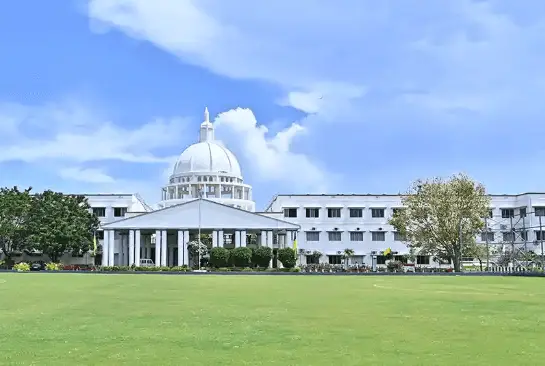
AVIT — Aarupadai Veedu Institute of Technology campus
AVIT

AVIT — Aarupadai Veedu Institute of Technology

Paiyanoor, Chennai (OMR), Tamil Nadu

AVIT, Paiyanoor is the engineering faculty of Vinayaka Mission's Research Foundation, a UGC-recognised deemed university, offering AICTE-approved B.Tech and M.Tech programmes with dedicated lateral-entry and credit-transfer intake.

Statutory approvals

  • UGC recognised — VMRF Deemed to be University
  • AICTE approved engineering programmes
  • NAAC A accredited institution
  • AIU member — degrees valid for PSU, government and overseas study
  • OMR / Chennai corridor campus with strong IT-industry placement access
  • Structured syllabus-mapping support for inbound transfer students
  • Modern AI & Data Science, Biomedical and Robotics laboratories
  • Part of the same VMRF group as AVMC Pondicherry

Established: 1997 — constituent of Vinayaka Mission's Research Foundation (VMRF-DU)

Credit transfer FAQ

The four questions that decide the outcome

What is B.Tech credit transfer and who is eligible?

Credit transfer lets a student carry cleared engineering credits from one UGC-recognised university to another and re-enter at 2nd or 3rd year. Eligible: year-back students, dropouts, discontinued-course students, N+2 expiry cases and diploma holders seeking lateral entry.

Will I lose an academic year in a credit transfer?

In most validated cases, no. Cleared credits are mapped to the receiving university's scheme and you enter the year those credits support. Only credits that were never cleared must be repeated, so the years already completed are not lost.

Is a credit-transfer degree from AVIT valid for jobs and higher study?

Yes. AVIT are UGC-recognised deemed universities and AIU members. Their degrees are accepted for private employment, PSU and government recruitment, PG admission in India, and overseas study after standard WES or ECA evaluation.

What documents are needed to start a credit-transfer evaluation?

All semester marksheets, the 10th and 12th certificates, the provisional or bonafide certificate from the current college, and the transfer certificate if already issued. Marksheets alone are enough to begin the free 2-hour eligibility audit.

Can engineering students transfer credits after a year-back or study gap?

Yes. Engineering students with backlogs or gaps can transfer their cleared course credits to UGC-recognized universities like AVIT, entering directly into 2nd or 3rd year without restarting from Year 1.

Are degrees obtained through lateral entry and credit transfer recognized for jobs and higher studies?

Yes. All degrees are conferred directly by UGC and AICTE recognized Deemed Universities and are valid for government examinations, corporate employment, postgraduate admission in India, and international credential evaluation for study abroad.

Send your marksheets. Find out today which year you can enter.

The audit is free and the answer is honest. If the credits do not support a transfer, you will be told that in writing rather than sold a seat.

WhatsApp Now