During admission
Document verification, done with you present
Most lost seats are lost over paperwork — a missing certificate, or a name spelled two different ways.
Engineering and medical seats at AVIT and AVMC — and a way back in if your degree has stalled. Send your marksheets, get a clear answer in 2 working days.
Written eligibility position within 2 working days · Mon–Sat, 9:00 AM – 8:00 PM IST
Vinayaka Mission Admission Desk is an independent admissions advisory operated by Fazim, an authorised university liaison with 10+ years of institutional experience. It handles two things: direct admission to engineering, medical, nursing and allied health programmes at AVIT and AVMC, and credit transfer and lateral entry for students whose engineering degree has stalled through a year-back, standing arrears, a discontinued course or an expired maximum duration.
Every enquiry begins with a free subject-by-subject audit of your semester marksheets, answered in writing within two working days. That audit — not an estimate — decides which credits carry across and which year you re-enter. All academic fees are paid directly to the university against an official receipt; there is no capitation, donation or cash component at any stage, and no seat is promised before the grade sheet has been read.
Pick the closest one. You do not need to know the right words for it.
Direct merit admission to B.E, B.Tech and M.E — no entrance rank needed.
See what appliesMBBS through NEET and MCC counselling; nursing and allied health without NEET.
See what appliesDetention and arrears each have a defined route out. Your credits are audited first.
See what appliesCompleted semesters are revalidated so you re-enter at the year your credits support.
See what appliesMaximum-duration (N+2) expiry does not end the degree. A fresh registration restarts the clock.
See what appliesEvening and weekend-friendly routes exist, including a three-year track for working professionals.
See what appliesInter-university transfer with cleared credits carried across, mid-degree.
See what appliesPick the track that matches where you are now.
Year-back, dropped out, arrears piling up or maximum duration expired? Cleared credits are audited and carried across to a UGC-recognised deemed university so the degree finishes instead of stalling.
Direct merit admission into AICTE-approved programmes at AVIT (Vinayaka Mission's Research Foundation) — no entrance-rank dependency.
MBBS and MD/MS through NEET counselling, plus direct-merit allied health sciences, B.Sc Nursing and BPT at Aarupadai Veedu Medical College, Puducherry, with its attached multi-specialty teaching hospital.
Finish what you started without stepping away from your job.
Every route ends with examinations you sit and pass at AVIT. Prior work experience can shape which programme suits you; it does not substitute for academic credit.
The difference shows up in five places. Each can cost you a year.
Seat allocation
Promises a seat that was never reserved, then disappears when the intake closes.
Marksheet handling
Never reads the grade sheet — quotes a price before knowing whether you are even eligible.
Fee structure
Cash "donation" and capitation demands with no receipt and no accountability.
Seat allocation
Merit seat reserved against your validated profile under the sanctioned university intake.
Marksheet handling
Subject-by-subject credit audit before anything is promised. Eligibility in writing, within 2 working days.
Fee structure
Official university fee structure on institutional letterhead, paid directly to the university.
Seats blocked against the university\'s sanctioned intake on your marks — not an informal promise.
Nothing is promised before the transcript is read. If the credits fall short, you are told in writing.
Published university fees, paid directly to the institution against a receipt. No cash components.
Each stage is tied to a document or an access you actually receive. Nothing is payable until you have the written position in hand.
Within 2 working days
Every semester marksheet is read subject by subject and you receive a written statement of which credits carry across and which entry year they support. This stage costs nothing, and nothing is payable until you decide to proceed.
Nothing payable at this stage
On accepting the position
A merit seat is reserved against the university's sanctioned intake on the strength of your verified marks.
5% of the university's tuition, paid to the university
2–4 working days later
Your cleared subjects are mapped against the receiving university's scheme for its equivalence committee, and your coursework for the entry semester is allocated.
Cumulative 50% of tuition, paid to the university
On enrolment
The university issues your official enrolment number and portal login. From this point you are a registered student of the institution, not an applicant.
Cumulative 70% of tuition, paid to the university
~1 month before exams
Examination hall ticket, university identity card and final semester allocation are issued ahead of the examination window.
Cumulative 90% of tuition, paid to the university
All tuition goes to the university. Every amount above is paid to the institution against an official receipt, on its own letterhead. There is no capitation component, no donation and no cash payment at any stage — and no share of your tuition is taken by this advisory.
Four steps. Each one ends with something in writing.
Every semester marksheet is read subject by subject to establish exactly which credits are cleared, which are in arrears, and which regulation year your degree falls under.
Cleared subjects are mapped against the receiving university's scheme so the equivalence committee can see, paper by paper, which credits carry across.
A merit seat is reserved against your validated profile at AVIT, and the enrolment file is submitted through the official university admission channel.
You complete the remaining semesters under the new university's regulations and are issued a UGC-recognised degree valid for employment, PSU recruitment and higher study abroad.
Getting the seat is one thing. Settling in far from home is what families actually worry about. All of it is handled.
During admission
Most lost seats are lost over paperwork — a missing certificate, or a name spelled two different ways.
During admission
One person, start to finish. No call centre, no repeating your story to someone new.
Settling in
If your child is moving 500km from home, where they will sleep matters more than the syllabus. We treat it that way.
After enrolment
Paying the fee is the start, not the end. Most problems show up in the first two semesters.
Fresh admission, lateral entry or credit transfer — the branch list is the same either way.
16 programmes at AVIT and AVMC. Every one leads to a UGC-recognised degree.
8 programmes at AVIT and AVMC. Every one leads to a UGC-recognised degree.
The degree is awarded by a UGC-recognised university whose institution is an AIU member — the two things overseas evaluators and Indian recruiters actually check.
United States & Canada
Accepts credentials from UGC-recognised Indian universities for course-by-course and document-by-document evaluation, used for higher study, professional licensing and immigration points assessments.
New Zealand
Assesses overseas qualifications against the New Zealand Qualifications Framework for study and skilled-migration purposes.
United Kingdom & Europe
The UK national agency for international qualification comparison — formerly UK NARIC — issuing statements of comparability for study and employment.
India
A UGC-recognised degree meets the graduation requirement for civil services, PSU recruitment and GATE or UGC-NET, subject to each notification’s own eligibility conditions.
How this actually works: these bodies evaluate an individual applicant's documents — they do not certify or approve institutions, and nobody can promise you a particular outcome in advance. What the university's UGC recognition and AIU membership give you is eligibility to be evaluated. The result then depends on your own transcripts and the rules in force at the time you apply.
Every approval below can be checked on the college's own website.
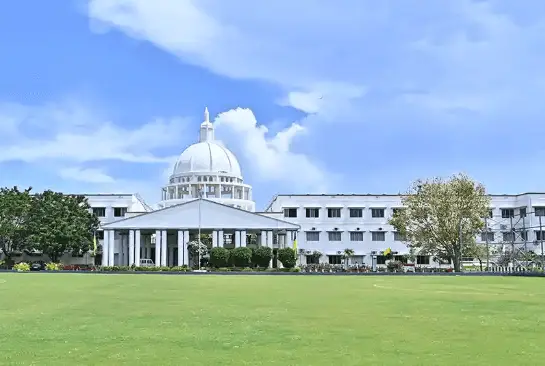
Paiyanoor, Chennai (OMR), Tamil Nadu
AVIT, Paiyanoor is the engineering faculty of Vinayaka Mission's Research Foundation, a UGC-recognised deemed university. It offers AICTE-approved B.E programmes (B.Tech in Biotechnology) with dedicated lateral-entry and credit-transfer intake, plus M.E and M.Tech at postgraduate level.
Established: 1997 — constituent of Vinayaka Mission's Research Foundation (VMRF-DU)

Kirumampakkam, Puducherry
Aarupadai Veedu Medical College & Hospital (AVMC), Puducherry is the NMC-recognised medical faculty of Vinayaka Mission's Research Foundation, offering MBBS, MD/MS, allied health sciences, B.Sc Nursing and BPT programmes with an attached multi-specialty teaching hospital.
Established: 1998 — constituent medical college of VMRF (Deemed to be University)
In their own words.
I had cleared five semesters and then lost a year. The marksheet audit came back in two days and told me exactly which credits carried across — no vague promises.
My parents were more worried about where I would stay than about the course. The hostel was sorted before we travelled, and they were shown the room before paying anything.
Two arrears had stalled my degree for three years. It was explained plainly that I would still have to sit the papers — and that is exactly how it went. I finished them.
I did not clear NEET and thought healthcare was closed to me. Nursing was explained properly, including what it does not lead to. First job within a month of internship.
The document verification checklist saved us. My name was spelled differently on two certificates and it was caught weeks before we reached the campus.
Coming from a polytechnic I expected to lose a year. I went straight into the third semester and the bridge papers were flagged before the term started, not after.
Short, specific, and honest about what is not possible.
What a degree certificate actually shows, what the marksheet shows, and who sees which.
Read the guideCleared credits do not expire, but what you can do with them depends on three things.
Read the guideWhat 'deemed to be university' means, and where such a degree is accepted.
Read the guideWhat to write, what not to hide, and how to answer the interview question.
Read the guideThe four routes out of standing arrears, and the deadline that closes most of them.
Read the guideYes — under UGC regulations. Here is the rule it rests on, and how to check any provider.
Read the guideWhat parents ask first.
Yes. Every institution named here is UGC-recognised, with AICTE approval for engineering programmes and the relevant statutory approval for each other stream. All degrees are UGC-recognised and AIU-accepted.
Yes. Send your semester marksheets on WhatsApp and you receive a written eligibility position within 2 working days — credits cleared, entry year possible, and institutions that can accept you. No fee is charged for the evaluation itself.
Lateral entry is admission directly into the second year (third semester) of a B.Tech, skipping the first year. Diploma holders enter under AICTE's standard lateral route. Students with cleared degree credits enter at the year their audited credits support, which is decided by a subject-by-subject marksheet review.
Yes, through lateral entry, where a sanctioned second-year intake exists. Two groups qualify: three-year polytechnic diploma holders, and students carrying cleared credits from an earlier degree. The entry year follows the credit audit, so nobody can confirm second year before reading your marksheets.
Sit the supplementary examinations at your own university while your maximum duration, usually N+2 or N+3 years, is still running. If that window has lapsed and your registration is closed, the remaining route is re-registering at another recognised university that accepts your cleared credits and sitting the outstanding papers there.
Only by entering in the second year. A diploma holder or a credit-transfer student admitted laterally completes the remaining three years. A B.Tech started in the first year runs four years and cannot be compressed — any offer to shorten it without lateral entry is not a recognised route.
Yes. A three-year state-board polytechnic diploma in engineering qualifies you for AICTE lateral entry into the second year of B.Tech, so the first year is not repeated. Admission is on diploma merit; no entrance rank is required at AVIT.
It means you carry more arrears than your university's promotion rule allows, so you were held in the same year instead of moving up. The credits you already cleared remain yours. Clearing the arrears, or transferring the cleared credits elsewhere, are both routes out.
No cost, no obligation, and no seat promised before the credits are verified. If the pathway does not exist, you will be told that too.