Skip to content
AICTE approved · UGC recognised

Direct Engineering Admissions

B.E, B.Tech and M.E at AVIT (Vinayaka Mission's Research Foundation) — merit seats reserved on 10+2 marks, filed through the official university admission channel, with the fee structure issued on institutional letterhead.

Direct Answer

How to secure direct admission for B.E, B.Tech and M.E at AVIT?

Direct admission for B.E, B.Tech and M.E programmes at AVIT (Vinayaka Mission's Research Foundation) is conducted through verified institutional quota and merit assessment. Candidates can access specializations including Computer Science — including AI & Machine Learning, Cyber Security and Data Science — Electronics & Communication, Electrical & Electronics, Mechanical, Civil, Biomedical and Biotechnology with transparent statutory fees, full counseling documentation, and zero donation requirements.

Both institutions are UGC-recognised Deemed to be Universities, which is why they admit under their own ordinances: B.Tech admission is granted on direct merit from 10+2 Physics, Chemistry and Mathematics marks, and a JEE Main or state engineering entrance rank is not a precondition. Diploma holders enter laterally at the 3rd semester under standard AICTE lateral-entry norms.

Specializations

AICTE-approved programmes at AVIT

Every branch below leads to a UGC-recognised degree. Availability is confirmed when your seat is reserved.

CSE

B.E Computer Science & Engineering

10+2 with Physics, Chemistry and Mathematics — direct merit admission

Duration
4 years / 8 semesters
Offered at
AVIT
Approval
AICTE approved · UGC recognised degree
CSE (AI & ML)

B.E Computer Science & Engineering (Artificial Intelligence & Machine Learning)

10+2 with Physics, Chemistry and Mathematics — direct merit admission

Duration
4 years / 8 semesters
Offered at
AVIT
Approval
AICTE approved · UGC recognised degree
CSE (Cyber Security)

B.E Computer Science & Engineering (Cyber Security)

10+2 with Physics, Chemistry and Mathematics — direct merit admission

Duration
4 years / 8 semesters
Offered at
AVIT
Approval
AICTE approved · UGC recognised degree
CSE (Data Science)

B.E Computer Science & Engineering (Data Science)

10+2 with Physics, Chemistry and Mathematics — direct merit admission

Duration
4 years / 8 semesters
Offered at
AVIT
Approval
AICTE approved · UGC recognised degree
ECE

B.E Electronics & Communication Engineering

10+2 with Physics, Chemistry and Mathematics — direct merit admission

Duration
4 years / 8 semesters
Offered at
AVIT
Approval
AICTE approved · UGC recognised degree
EEE

B.E Electrical & Electronics Engineering

10+2 with Physics, Chemistry and Mathematics — direct merit admission

Duration
4 years / 8 semesters
Offered at
AVIT
Approval
AICTE approved · UGC recognised degree
MECH

B.E Mechanical Engineering

10+2 with Physics, Chemistry and Mathematics — direct merit admission

Duration
4 years / 8 semesters
Offered at
AVIT
Approval
AICTE approved · UGC recognised degree
CIVIL

B.E Civil Engineering

10+2 with Physics, Chemistry and Mathematics — direct merit admission

Duration
4 years / 8 semesters
Offered at
AVIT
Approval
AICTE approved · UGC recognised degree
BME

B.E Biomedical Engineering

10+2 with Physics, Chemistry and Mathematics — direct merit admission

Duration
4 years / 8 semesters
Offered at
AVIT
Approval
AICTE approved · UGC recognised degree
BT

B.Tech Biotechnology

10+2 with Physics, Chemistry and Mathematics — direct merit admission

Duration
4 years / 8 semesters
Offered at
AVIT
Approval
AICTE approved · UGC recognised degree
M.E CSE

M.E Computer Science & Engineering

B.E or B.Tech in a relevant branch from a UGC-recognised university

Duration
2 years / 4 semesters
Offered at
AVIT
Approval
AICTE approved · UGC recognised degree
M.E Construction

M.E Construction Engineering & Management

B.E or B.Tech in Civil Engineering from a UGC-recognised university

Duration
2 years / 4 semesters
Offered at
AVIT
Approval
AICTE approved · UGC recognised degree
M.E Embedded

M.E Embedded Systems Technologies

B.E or B.Tech in a relevant branch from a UGC-recognised university

Duration
2 years / 4 semesters
Offered at
AVIT
Approval
AICTE approved · UGC recognised degree
M.E Manufacturing

M.E Manufacturing Engineering

B.E or B.Tech in a relevant branch from a UGC-recognised university

Duration
2 years / 4 semesters
Offered at
AVIT
Approval
AICTE approved · UGC recognised degree
M.E Power Systems

M.E Power Systems Engineering

B.E or B.Tech in a relevant branch from a UGC-recognised university

Duration
2 years / 4 semesters
Offered at
AVIT
Approval
AICTE approved · UGC recognised degree
M.Tech BT

M.Tech Biotechnology

B.E, B.Tech or M.Sc in a relevant life-sciences or biotechnology discipline

Duration
2 years / 4 semesters
Offered at
AVIT
Approval
AICTE approved · UGC recognised degree
Eligibility & documents

What qualifies you, and what to keep ready

Missing paperwork is the most common reason a confirmed seat is lost. Get this ready first.

Programme-wise eligibility criteria and admission basis
ProgrammeMinimum eligibilityAdmission basis
B.Tech (all specializations)Pass in 10+2 / HSC with Physics, Chemistry and MathematicsDirect merit on qualifying-exam marks — no JEE or state entrance rank required
B.Tech — Diploma lateral entry3-year state-board polytechnic diploma in a relevant engineering branchDirect admission into the 3rd semester (2nd year) under AICTE lateral-entry norms
M.TechB.E / B.Tech in a relevant discipline from a UGC-recognised universityDirect merit admission; GATE-qualified candidates considered for scholarship categories

Document checklist

  • 10th standard marksheet (original + 2 attested copies)
  • 12th standard / HSC marksheet (original + 2 attested copies)
  • Transfer Certificate (TC) from the last institution attended
  • Conduct / Character certificate
  • Migration certificate — mandatory for CBSE, ICSE and other non-state boards
  • Community certificate, issued by the Tahsildar, where a category is claimed
  • Nativity certificate, where the university or a scholarship requires proof of domicile
  • Aadhaar card and, for international applicants, passport and visa pages
  • Six recent passport-size photographs
  • Diploma consolidated marksheet and provisional certificate — lateral-entry applicants only

Direct merit criteria

  • Selection

    Ranking is on aggregate marks in Physics, Chemistry and Mathematics at 10+2, applied against the branch's sanctioned intake. Higher aggregates get first call on the highest-demand branches.

  • Timeline

    Applications open in March; allotment is rolling and closes when the intake fills — in most years by August. CSE and its AI & Machine Learning specialisation are the first to close.

  • Fees

    The published university fee structure is issued on institutional letterhead and paid directly to the university against an official receipt. There is no capitation or donation component in this pathway.

  • Provisional offer

    A provisional admission order with a university register number is issued once documents are verified and the first instalment is receipted.

What happens after the seat is confirmed

Admission is the first step, not the whole job

Paperwork, hostel, travel and the first month — handled with you, not left to you.

During admission

Document verification, done with you present

Most lost seats are lost over paperwork — a missing certificate, or a name spelled two different ways.

  • A written checklist is issued before you travel, so nothing is discovered missing on the day
  • Name, date-of-birth and board mismatches across certificates are identified and corrected in advance
  • You are accompanied through the verification desk rather than sent to find it alone
  • Where a document is genuinely unavailable, the accepted substitute is arranged with the office beforehand

During admission

One person, from first enquiry to enrolment

One person, start to finish. No call centre, no repeating your story to someone new.

  • Direct WhatsApp access during working hours, not a shared enquiry queue
  • The person who reads your marksheets is the person who files your application
  • Parents are updated directly, in the language they are comfortable with
  • Every commitment made to you is confirmed in writing, so nothing rests on a phone call

Settling in

Hostel and accommodation, arranged before you arrive

If your child is moving 500km from home, where they will sleep matters more than the syllabus. We treat it that way.

  • Hostel application submitted alongside the admission file, not left until after enrolment
  • Room categories, mess charges and the deposit explained upfront so the total cost is known in advance
  • Vetted private accommodation nearby where hostel places are full or a family prefers it
  • Parents are welcome to inspect the accommodation before the fee is committed

Settling in

Getting there, and getting home

How to get there, and how to get home again — including the first trip and every holiday after it.

  • Nearest railway station and airport, with the local connection onward to campus
  • Bus routes and timings between the campus and the town centre
  • Guidance on term-break and festival travel, when tickets need booking well ahead
  • A local contact number for the student's first weeks, in case a journey goes wrong

Settling in

Food, essentials and the first month

The everyday questions families actually ask, answered straight.

  • Mess arrangements, including vegetarian, halal and regional options where available
  • Where to buy books, stationery, bedding and everyday essentials near campus
  • Banking, SIM card and local registration formalities for out-of-state students
  • Clinic and pharmacy access, and what to do if a student falls ill in the first weeks

Academic

Honest guidance when your first-choice branch is full

Popular branches fill first. If yours has gone, the real question is which of the rest gets you where you want to go.

  • Current availability confirmed against the university's sanctioned intake before you apply
  • Realistic alternatives explained in terms of what graduates from each branch actually do
  • Where an alternative genuinely does not serve your ambition, you are told so
  • Internal branch-change rules at the institution explained, including what is and is not permitted later

Academic

Syllabus mapping by people who know the subjects

A credit file works or fails on whether the subject mapping holds up. That is subject work, not paperwork.

  • Course outcomes compared subject by subject, not by title alone
  • Mapping prepared in the format the university's equivalence committee expects to receive
  • Bridge or gap papers identified before enrolment, so semester one holds no surprises
  • Where credits genuinely do not carry across, that is stated in the audit rather than discovered later

After enrolment

Support that continues after the fee is paid

Paying the fee is the start, not the end. Most problems show up in the first two semesters.

  • Help resolving registration, examination-registration and credit-posting errors
  • A point of contact if arrear-paper scheduling or results throw up a problem
  • Guidance on internal scholarships and fee instalment options where the institution offers them
  • Continued contact through to the final year and the degree certificate being issued

Settling in

AVIT — Paiyanoor, on the OMR corridor

The engineering campus sits on the Old Mahabalipuram Road corridor south of Chennai, in Chengalpattu district.

  • Reached from Chennai by OMR; road transfers from the airport and Central station arranged for first arrival
  • Separate hostels for men and women, with dining, applied for alongside the admission file
  • Buses between the campus and the nearest town for weekend essentials
  • [VERIFY] Exact hostel block, room categories and current mess rates — confirm on the university's own accommodation page before quoting a total

Settling in

Settled before you travel

Nobody should arrive on campus with the room, the paperwork and the route still unresolved.
  • Hostel application submitted with the admission file, not after enrolment
  • Document checklist issued in advance, and mismatches across certificates resolved before you set off
  • Travel route, arrival day and who meets you agreed beforehand
  • A local contact number for the first weeks, in case something goes wrong on the way
The campus

AVIT (Vinayaka Mission's Research Foundation)

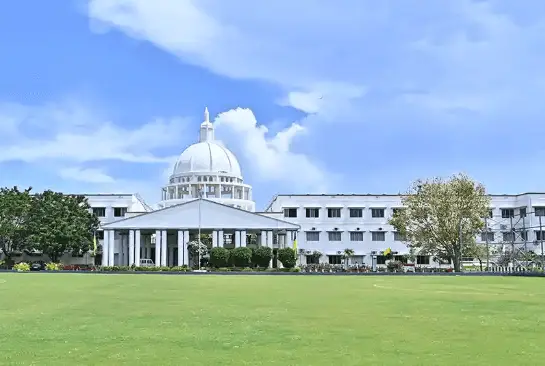
AVIT — Aarupadai Veedu Institute of Technology campus
AVIT

AVIT — Aarupadai Veedu Institute of Technology

Paiyanoor, Chennai (OMR), Tamil Nadu

AVIT, Paiyanoor is the engineering faculty of Vinayaka Mission's Research Foundation, a UGC-recognised deemed university. It offers AICTE-approved B.E programmes (B.Tech in Biotechnology) with dedicated lateral-entry and credit-transfer intake, plus M.E and M.Tech at postgraduate level.

Statutory approvals

  • UGC recognised — VMRF Deemed to be University
  • AICTE approved engineering programmes
  • NAAC A accredited institution
  • AIU member — degrees valid for PSU, government and overseas study
  • OMR / Chennai corridor campus with strong IT-industry placement access
  • Structured syllabus-mapping support for inbound transfer students
  • CSE specialisations in AI & Machine Learning, Cyber Security and Data Science
  • Industry-embedded B.E tracks run with Intel and HCL Tech

Established: 1997 — constituent of Vinayaka Mission's Research Foundation (VMRF-DU)

Admissions FAQ

What parents ask before the application goes in

Can I get direct B.Tech admission at AVIT without an entrance exam?

Yes. AVIT offers direct merit-based admission to B.Tech on 10+2 Physics, Chemistry and Mathematics marks. No JEE or state entrance rank is required.

Which B.Tech specializations are available?

Computer Science — including AI & Machine Learning, Cyber Security and Data Science — Electronics & Communication, Electrical & Electronics, Mechanical, Civil, Biomedical and Biotechnology at AVIT, plus M.Tech and M.E postgraduate specialisations. Every branch leads to a UGC-recognised degree.

What documents are required for engineering admission?

Applicants submit 10th and 12th marksheets, transfer certificate, conduct certificate, migration certificate for non-state boards, community certificate where applicable, Aadhaar and passport photographs.

When do admissions open and when do seats close?

Applications open from March and merit seats are allotted on a rolling basis until the sanctioned intake fills, usually by August. Popular branches such as CSE and its AI & Machine Learning specialisation close earliest, so early marksheet submission materially improves seat choice.

How many credits is a B.Tech degree?

Under the AICTE model curriculum a four-year B.Tech is typically around 160 credits, and the exact total varies by university and regulation year. What matters for a transfer is not the headline number but which of your credits the receiving university's equivalence committee recognises.

Reserve the branch before it closes.

Send your 12th marksheet and preferred branch. You get current seat status at both universities and the official fee structure — usually the same day.